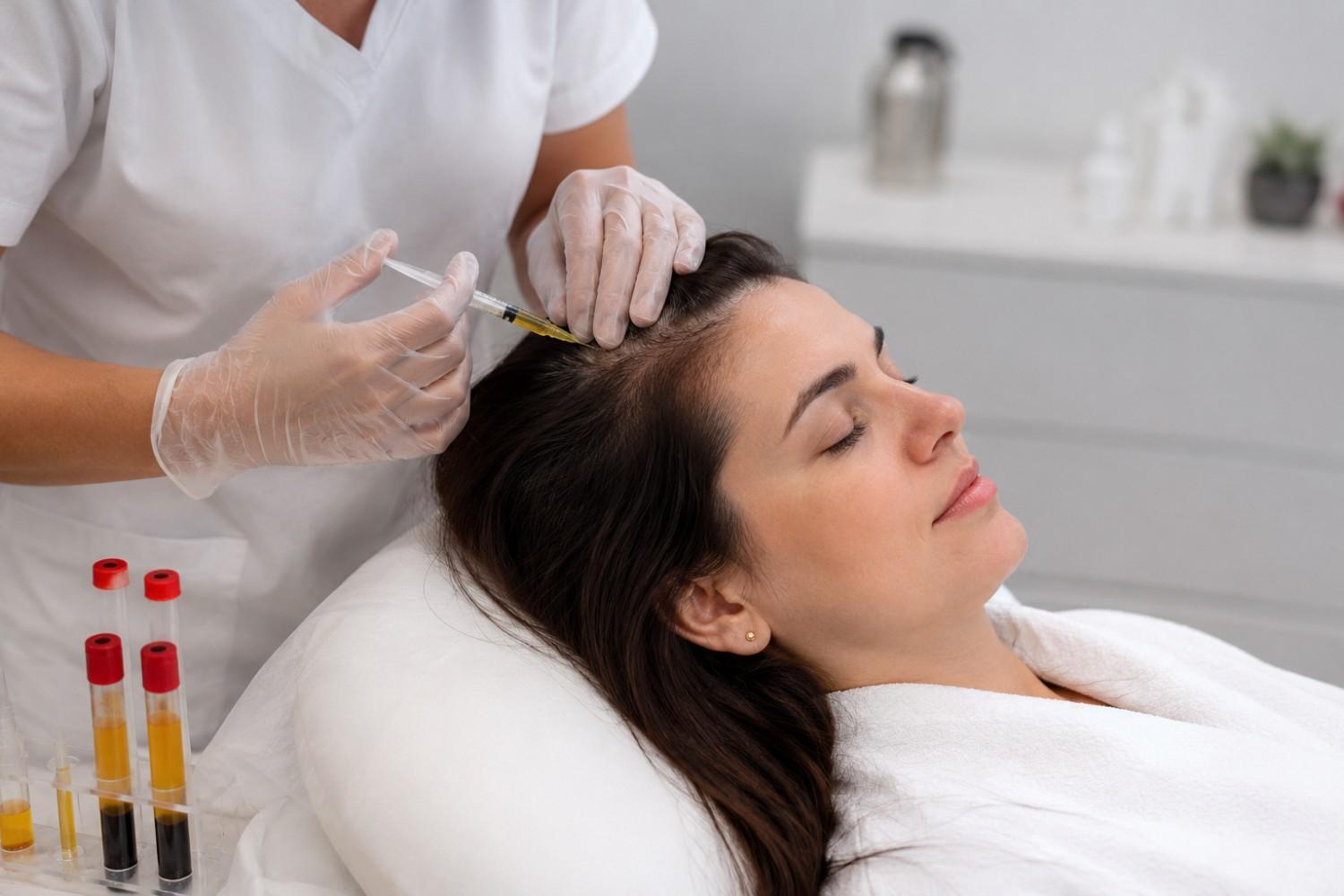
A female PRP combination therapy approach paired with a hair transplant offers an advanced solution for addressing hair loss. Surgeons administer Platelet-Rich Plasma (PRP) during surgery to improve graft survival or after the procedure to stimulate existing hair follicles, with treatment sessions typically ranging from $400 to $1,500 each.
Hair Transplant Dallas provides personalized treatment plans that combine advanced surgical techniques with PRP to support healing, strengthen transplanted grafts, and encourage healthier hair growth based on each patient’s individual hair restoration goals.
What Is Female PRP Combination Therapy?
What Is Platelet Rich Plasma (PRP)?
Platelet Rich Plasma, or PRP, comes from a small sample of blood. A medical team spins the blood in a special machine to separate the platelets from the other parts. The platelets hold natural growth factors that help support healing. Female PRP combination therapy uses these growth factors with a hair restoration procedure to help support healthy hair growth.
How Is PRP Prepared?
A healthcare provider takes a small blood sample before treatment. Next, the blood goes into a centrifuge that spins very fast to separate the platelet rich plasma. The provider collects the PRP and gets it ready for use during or after the procedure. PRP for female hair loss gives the scalp a high amount of natural growth factors that help support the healing process.
How PRP Works With Surgical Hair Restoration
Doctors place PRP in the treated area during or after surgery. The growth factors help support the healing process and create a healthy place for the hair grafts. The treatment works with the procedure instead of replacing it. Female hair restoration often includes PRP because it helps support healthy hair follicles while the scalp heals.
Why Doctors Recommend This Combination
Many doctors recommend this treatment because it supports healing and helps protect new grafts. It may help improve hair thickness and support healthy hair growth over time. As a result, many patients choose this option because it combines surgery with the body’s own natural healing process.
How PRP Enhances Hair Restoration Results
Supports Graft Survival
Hair grafts need a healthy blood supply after surgery. PRP gives the treated area natural growth factors that help the grafts settle into the scalp. As a result, female PRP combination therapy helps support graft survival and gives new hair a better chance to grow.
Stimulates Existing Hair Follicles
PRP helps wake up weak hair follicles that still have the ability to grow hair. The growth factors support the follicles and help them stay active. In many cases, platelet-rich plasma therapy helps improve the condition of existing hair over time.
Encourages Faster Healing
The scalp needs time to heal after a hair restoration procedure. PRP helps the body repair the treated area by supporting the natural healing process. Because of this, many patients notice less soreness and feel ready to return to normal activities sooner.
Improves Hair Density
Healthy hair follicles grow stronger hair over time. PRP supports the follicles and helps them produce thicker strands. As new hair grows, many patients notice fuller hair and better coverage in areas with thinning.
Promotes Scalp Health
A healthy scalp gives hair a better place to grow. PRP supports blood flow and helps keep the scalp in good condition during healing. Over time, a healthy scalp helps support stronger hair growth and long lasting results.
Who Is a Candidate for Combination Therapy?
Female Pattern Hair Loss
Women with female pattern hair loss often notice slow thinning on the top of the scalp. Hair may become thinner over time instead of falling out all at once. Female PRP combination therapy helps support healthy hair growth when paired with the right treatment plan.
Diffuse Thinning
Diffuse thinning means hair becomes thinner across many parts of the scalp. The hairline often stays the same, but the hair looks less full. A hair specialist checks the scalp and hair to find the best treatment for each person.
Hairline Restoration
Some women want to improve a high or uneven hairline. Hair restoration can add hair to areas that need more coverage and create a more natural shape. The treatment plan depends on the amount of hair loss and the available donor hair.
Patients Undergoing FUE
Women who choose Follicular Unit Extraction (FUE) may benefit from combination therapy during recovery. The treatment helps support healing and creates a healthy place for the grafts to grow. A specialist decides if FUE is the right option after a full hair exam.
Patients Undergoing FUT
Follicular Unit Transplantation (FUT) works well for women who need many grafts in one procedure. The treatment plan depends on hair loss, scalp health, and personal goals. Dr. Stefan P. Thiele, M.D. carefully evaluates each patient before recommending the most suitable approach.
Healthy Donor Hair
Healthy donor hair gives the surgeon strong follicles for transplantation. The donor area must have enough healthy hair to provide lasting results. A careful exam helps determine if the donor hair meets the needs of the procedure.
Hair Restoration Techniques That Pair With PRP
Follicular Unit Extraction (FUE)
FUE removes single hair follicles from the donor area and places them in areas with hair loss. The small openings help many patients heal with little scarring. FUE hair transplant in Dallas often works well with PRP because the treatment helps support healthy grafts and the healing process.
Follicular Unit Transplantation (FUT)
FUT removes a small strip of scalp from the donor area to collect healthy hair follicles. The surgeon then places the follicles where more hair is needed. FUT hair transplant in Dallas may pair with PRP to help support healing and improve the condition of the treated area.
Hybrid Hair Restoration Procedures
A hybrid procedure combines FUE and FUT to meet each patient’s hair goals. The surgeon chooses the best parts of both methods to move more healthy grafts when needed. Female PRP combination therapy fits well with this approach because it helps create a healthy scalp that supports new hair growth.
Hair Restoration Technologies Used During Treatment
Automated FUE Systems
Automated FUE systems help the surgeon remove hair follicles with steady and careful movements. The tools help reduce damage to healthy follicles and make the process more accurate. Female PRP combination therapy works well with these systems because healthy grafts and a healthy scalp support better healing.
- Better Accuracy: The tool helps remove hair follicles with care.
- Less Damage: Healthy follicles stay in better condition during the procedure.
- Steady Results: The system helps place grafts in the right areas.
NeoGraft Technology
NeoGraft Hair Restoration uses a special device to remove and collect hair follicles before the surgeon places them into thinning areas. The tool helps speed up the process while protecting healthy grafts.
- Fast Collection: The device gathers hair follicles in less time.
- Healthy Grafts: Careful handling helps keep grafts in good shape.
- Natural Results: Healthy grafts support natural hair growth.
WAW Extraction Technology
The WAW FUE system uses a punch with a shape that matches the natural hair follicle. This design helps remove grafts with less stress on the surrounding tissue and supports healthy follicle quality.
- Special Design: The punch follows the natural shape of each follicle.
- Healthy Follicles: The tool helps protect graft quality.
- Small Openings: Smaller cuts help support the healing process.
Ellis FUE System
The Ellis FUE system uses an automated tool to remove hair follicles with steady control. The system helps the surgeon work with good speed while keeping the grafts in good condition. PRP treatment for thinning hair may support healing after the follicles are placed into the scalp.
- Steady Control: The tool helps remove follicles with care.
- Good Speed: The system helps complete the procedure more smoothly.
- Strong Grafts: Healthy follicles have a better chance to grow.
Precision Follicle Harvesting Tools
Precision harvesting tools help the surgeon choose and remove healthy hair follicles with care. The tools help protect the grafts before they move to the treatment area. Better graft quality gives each follicle a stronger chance to grow healthy hair after the procedure.
Ready to Improve Hair Growth?
Hair Transplant Dallas offers personalized care for every stage of female PRP combination therapy. A skilled team will review hair loss, explain the best treatment options, and build a plan that fits individual goals. Contact us today to schedule a consultation and learn more.
FAQs
Is PRP safe for women?
Yes. PRP uses a small sample of the patient’s own blood, so the risk of an allergic reaction is very low. A qualified provider follows safe steps during the procedure.
How long does a PRP session take?
Most PRP sessions take about 30 to 60 minutes. The exact time depends on the treatment plan and the areas being treated.
When will I see results after PRP?
Hair grows slowly, so results take time. Many patients notice changes after a few months, while full results often appear within six to twelve months.
Can PRP help with thinning hair?
Yes. PRP helps support healthy hair follicles and may improve hair thickness in people with thinning hair. Results vary from person to person.
How many PRP treatments do I need?
Many patients start with several treatments spaced a few weeks apart. After that, a provider may recommend maintenance sessions to help support long-term hair growth.